Understanding Container House Technology: Materials, Design & Construction
The container house industry has evolved significantly over the past decade, transforming from simple shipping container conversions to sophisticated modular building systems. Understanding the technology behind these structures is essential for anyone considering container-based construction projects.
Core Structural Materials
Steel Framework
The foundation of any quality container house is its steel framework. At SinoSure, we use corten steel (weathering steel) for our container structures, which offers several advantages:
- Superior corrosion resistance: Corten steel forms a protective oxide layer that prevents further corrosion
- High strength-to-weight ratio: Enables robust structures without excessive weight
- Long-term durability: Properly maintained corten steel structures can last 25+ years
The steel thickness typically ranges from 1.6mm to 3.0mm, depending on the application and structural requirements. For permanent installations, we recommend a minimum of 2.0mm thickness.
Insulation Systems
Modern container houses employ various insulation technologies:
- Polyurethane Foam (PU): Offers the highest R-value per inch, ideal for extreme climates
- Rock Wool: Fire-resistant and excellent sound insulation properties
- EPS (Expanded Polystyrene): Cost-effective solution for moderate climates
Our standard insulation thickness is 50-100mm, achieving thermal resistance values of R-13 to R-25.
Innovative Design Features
Expandable Container Technology
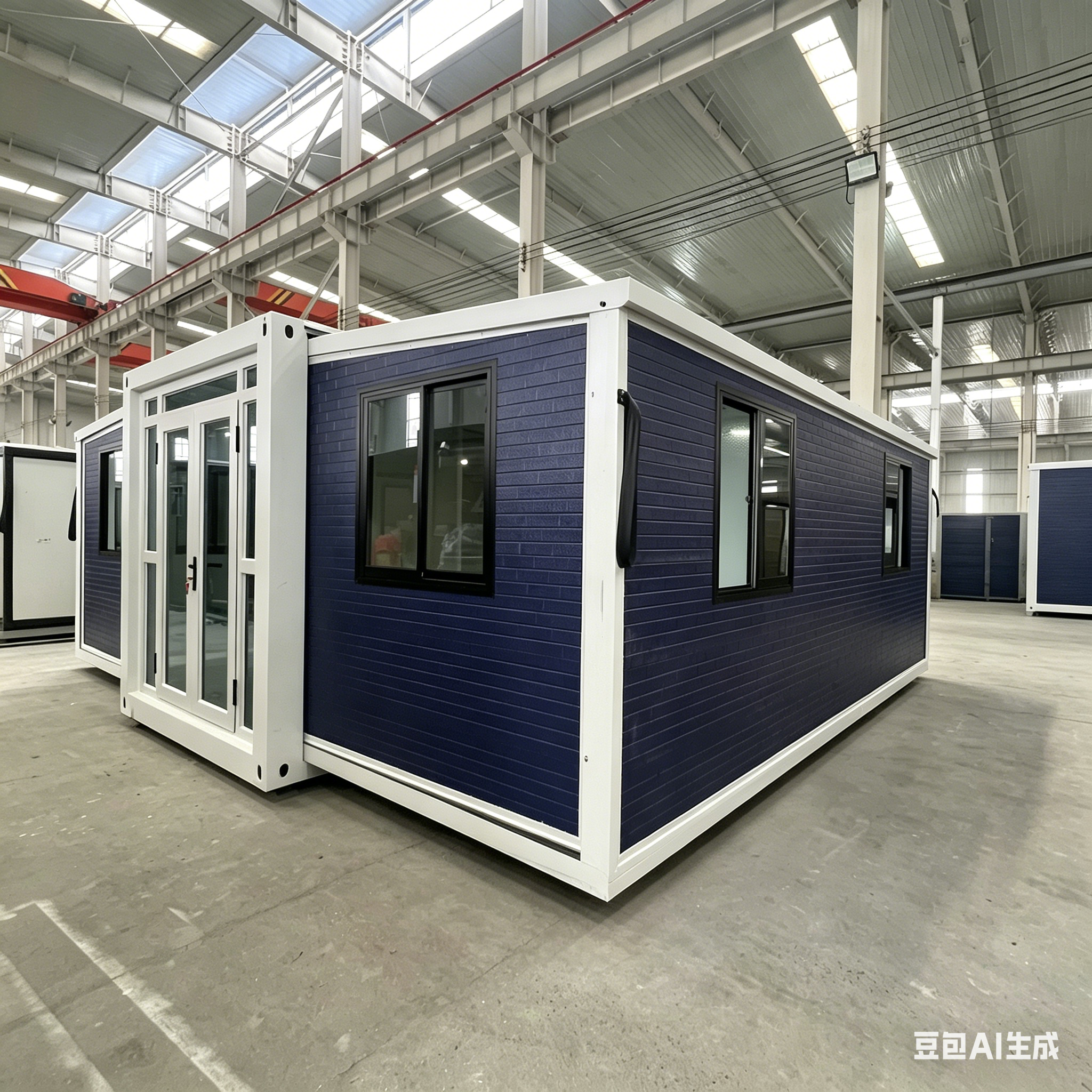
Our expandable container houses utilize a patented telescopic mechanism that allows the structure to expand to twice its original footprint during installation. Key technical specifications:
| Specification | Standard | Expanded |
|---|---|---|
| Width | 2.4m | 4.8m |
| Floor Area | 15m² (20ft) | 30m² (20ft) |
| Setup Time | - | 30 minutes |
Folding Container Systems
The folding container house represents another innovation in modular construction:
- Transport efficiency: Reduces shipping volume by 50%
- Rapid deployment: Can be assembled in 10 minutes by 2 workers
- Structural integrity: Maintains full load-bearing capacity when deployed
Construction Methods
Welding vs. Bolting
We employ both welding and bolting techniques depending on the application:
Welding advantages:
- Superior structural integrity
- Better weather sealing
- Lower maintenance requirements
Bolting advantages:
- Easier disassembly and relocation
- Faster on-site assembly
- Reduced need for specialized equipment
Floor Systems
Our container houses feature multi-layer floor systems:
- Base layer: 18mm plywood or steel plate
- Insulation layer: 50mm PU foam
- Surface layer: Vinyl flooring, laminate, or tiles
- Optional underfloor heating: For cold climate applications
Electrical & Plumbing Integration
Modern container houses include pre-installed electrical and plumbing systems:
- Electrical: Pre-wired with standard outlets, switches, and circuit breakers
- Plumbing: Pre-installed pipes for water supply and drainage
- HVAC ready: Provisions for air conditioning units
All systems comply with international building codes and can be customized to meet local requirements.
Quality Standards & Certifications
Our container houses meet rigorous quality standards:
- ISO 9001: Quality management system certification
- CE Marking: European conformity for product safety
- AS/NZS Standards: Australian and New Zealand building codes
Conclusion
Container house technology has matured into a sophisticated building solution that combines structural integrity, energy efficiency, and rapid deployment. Understanding these technical aspects helps buyers make informed decisions and ensures successful project outcomes.
For more information about our container house technologies or to discuss your specific requirements, contact our technical team.
Last updated: May 2025